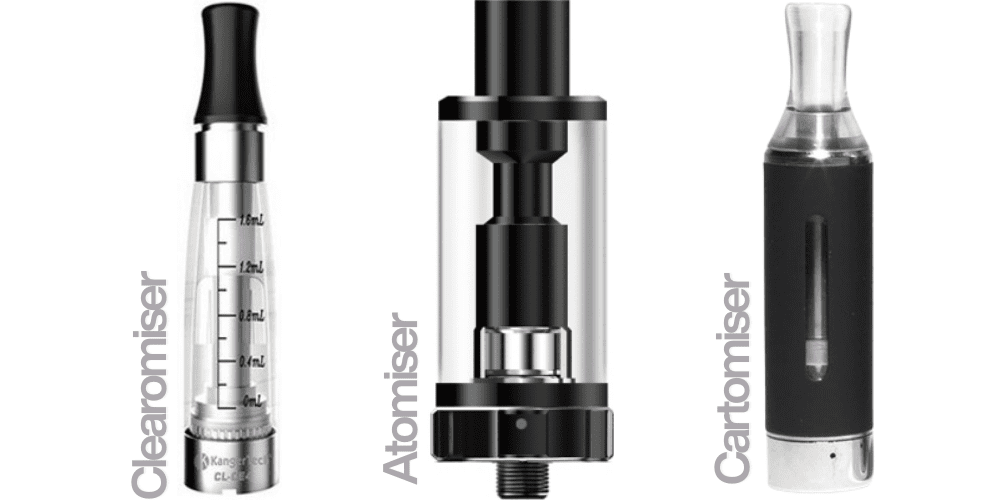

If you vape and you are flying this year, the rules are simpler than most people think — but the few that exist are strict, and one or two carry real consequences if you get them wrong. This guide covers what UK government and Civil Aviation Authority guidance actually says about flying with a vape: what goes in hand luggage, what must never go in the hold, how e-liquid fits into the liquids rule, what happens at altitude with a refillable tank, and the countries where you should leave your kit at home entirely.
Can you take a vape on a plane?
Yes — in your hand luggage. UK government guidance on hand luggage restrictions is unambiguous: e-cigarettes are allowed in cabin baggage and are not allowed in hold luggage. That applies to every kind of device — pod kits, mods, disposables and heat-not-burn devices alike.
The reason is the battery. Vapes run on lithium batteries, and a damaged or faulty lithium battery can overheat and catch fire. In the cabin, the crew can deal with that in seconds. In the hold, nobody can reach it. This is why the rule has no exceptions and why airport security will pull a checked bag with a vape inside it.
So the one rule to remember above all others: your vape travels in the cabin with you, never in a checked bag.
Hand luggage vs hold: what goes where
- Devices (any vape, pod kit, mod, disposable): hand luggage only. The CAA's dangerous goods guidance says battery-powered smoking devices must be carried on your person or in cabin baggage — never checked.
- Spare batteries: hand luggage only, and each one individually protected against short circuits (more below).
- E-liquid: allowed in either. In hand luggage it counts towards your liquids allowance; in the hold it does not, so larger bottles are usually easier to check.
- Empty tanks, pods, coils and drip tips: no battery, no liquid, no restriction — pack them wherever you like.
Batteries: the rules the CAA actually sets
The CAA publishes the detailed rules for lithium batteries on UK flights, and they are worth knowing precisely rather than roughly:
- Spare batteries go in the cabin, never the hold. A battery inside a device is treated differently from a loose spare — spares are the higher risk, and checked baggage is off-limits for them entirely.
- Each spare must be individually protected against short circuits. The CAA's wording is that batteries should be in their original retail packaging or have their terminals insulated. In practice: a plastic battery case, or tape over the terminals. A loose 18650 rattling around a pocket with keys and coins is exactly what the rule exists to prevent.
- Limits: lithium-ion batteries up to 100Wh are fine without airline approval — every consumer vape battery sits far below this — and the CAA caps spares at two per person for the larger sizes.
- No charging on board. The CAA states plainly that devices and batteries must not be recharged on the aircraft. Charge everything before you leave, and keep the charger in your bag, not in use.
Airlines add their own conditions on top. easyJet, for example, requires vaping devices to be switched off completely for the flight — off, not standby or locked — and treats using or charging one on board as a disruptive-passenger matter. Check your own airline's restricted items page before you fly; it takes two minutes.
E-liquid and the 100ml liquids rule
E-liquid is a liquid like any other at security. Under UK government guidance, at most airports you cannot take containers larger than 100ml through security, and where a bag is required, your liquids go in a single transparent resealable bag of no more than a litre, roughly 20cm x 20cm, one bag per person.
For vapers this is rarely a problem: standard 10ml bottles of nic salt or freebase liquid fit easily, and even a 50ml or 100ml shortfill is within the container limit. A filled tank or pod counts as a liquid container too, so put the device in the tray with your liquids bag rather than arguing the point at the belt.
Two useful details from the government guidance:
- Some UK airports with newer scanners now allow containers of up to 2 litres — but this varies airport by airport, and the guidance says to check your airport's own rules before travelling. Pack to the 100ml rule and you are covered everywhere.
- Liquids you do not need in the cabin are better in the hold. There is no 100ml restriction on e-liquid in checked baggage, so if you are carrying enough for a fortnight, check most of it and carry one or two bottles.
One packing tip that saves messes: bottles and filled pods travel better inside a zip-lock bag. Cabin pressure changes make anything with air inside it want to push liquid out.
Vaping in the airport
You cannot vape inside UK airport terminals except in designated smoking areas, and most of those are outside the building, before security. Some airports have a post-security smoking area and many do not — it differs by airport and terminal, so if it matters to you, check your airport's website before you decide when to go through. Vaping in toilets, gates or airside corridors is treated the same as smoking and can mean a fine.
And to be clear on the flight itself: you cannot vape on a plane. No airline permits it, aircraft toilets have smoke detectors, and setting one off is a criminal matter, not an awkward conversation. Eleven hours to Bangkok without a vape is survivable; the alternative is genuinely not worth it.
Refillable kits at altitude: why tanks leak and how to stop it
If you use a refillable tank or pod, the one problem the rules do not warn you about is physics. Cabin air pressure drops after take-off, the air pocket inside a part-filled tank expands, and it pushes e-liquid out through the airflow holes. This is the single most common way vapers ruin a bag in transit.
Three ways to prevent it:
- Fly with the tank empty or completely full. Empty is safest. Full works because there is almost no air inside to expand. Half-full is the worst of both.
- Store the device upright, mouthpiece up, so any expanding air pushes against the drip tip rather than out through the coil.
- Close the airflow if your tank has adjustable airflow, and keep the device in that zip-lock bag anyway.
Disposables and sealed pre-filled pods are less prone to this, but not immune — the zip-lock bag habit covers those too. If you are not sure how to strip down or empty your particular kit, staff in any of our shops — Merry Hill, Telford, Chelmsley Wood, Stevenage and Coalville — will happily show you how to prep your kit for a flight. It is a two-minute job and people ask us all the time before holidays.
On arrival: check your destination's law before you pack
UK flight rules are the easy part. The rules at the other end are where travellers get into genuine trouble, because a growing number of countries restrict or ban vaping entirely — including for tourists.
Thailand is the clearest example. The Foreign Office's travel advice states it is illegal to possess or use any vape, e-cigarette, pod, e-liquid or heat-not-burn device in Thailand, with no exceptions for tourists or personal use. Offences can lead to confiscation, fines typically between 5,000 and 30,000 baht, detention and court proceedings. If Thailand is your destination, leave everything at home.
Other countries have their own restrictions — on nicotine-containing liquid, on sale, or on possession — and these change often enough that a list printed here would go stale. The reliable habit is this: before any trip, read the gov.uk foreign travel advice page for your destination and search it for "e-cigarette". If the advice is unclear, assume caution and check before you fly rather than finding out at customs.
Quick FAQ
Can I take a disposable vape on a plane?
Yes, in hand luggage, same as any other device — and definitely not in the hold, since a disposable's battery cannot be removed.
How many vapes can I take?
UK government guidance does not set a fixed number for devices, but individual airlines often set their own per-passenger limits. If you are carrying more than a couple, check your airline's restricted items page before you fly.
Can I take 10ml e-liquid bottles in hand luggage?
Yes. They are well under the 100ml container limit — just put them in your clear liquids bag where the airport requires one.
What happens if I leave a vape in my checked bag by mistake?
Bags are screened, and a bag flagged for a lithium battery can be searched, delayed or have the item removed. If you realise before take-off, tell airline staff — moving it to the cabin is the fix, and they deal with this daily.
Can I charge my vape on the plane or in the airport?
Not on the plane — the CAA prohibits recharging devices or batteries on board. In the terminal, airport charging points are fine.
Before you fly: the 60-second checklist
- Device and all spare batteries in hand luggage — nothing battery-powered in the hold.
- Spare batteries in a case or with taped terminals.
- Everything charged; device switched fully off for the flight.
- Tank empty or full, airflow closed, kit in a zip-lock bag.
- E-liquid: cabin bottles under 100ml in the clear bag; the rest in the hold.
- Destination checked on gov.uk foreign travel advice.
If you would rather have someone walk through it with you — or you want your kit set up so it travels cleanly — call into any Electromist shop before your trip and our team will sort it with you.